By Marine Technical Superintendent – Tarun Kansal
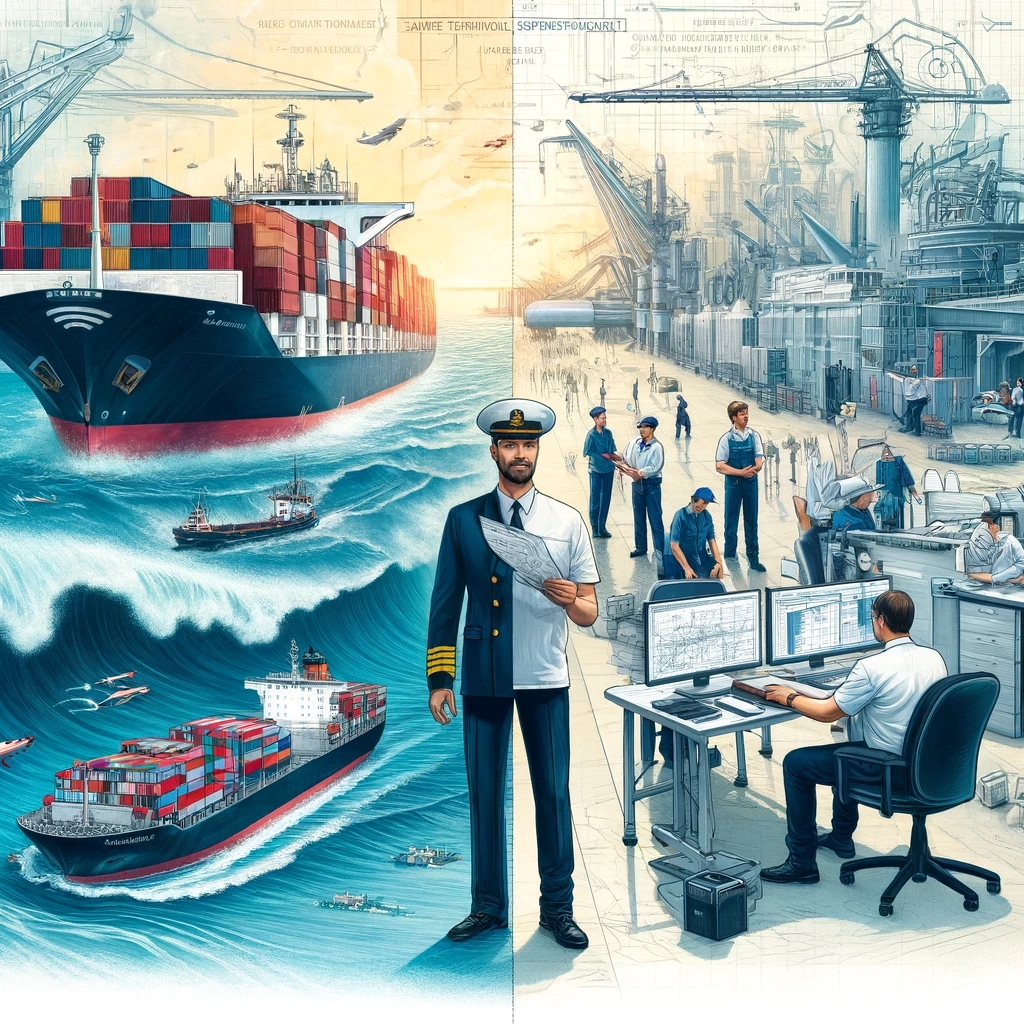
The Merchant Navy plays a vital role in global trade, transporting goods across oceans and seas. As an industry, it offers diverse career opportunities both at sea and on land. This article delves into the various facets of a career in the Merchant Navy, including the paths available for those interested in sailing and shore-based roles.
Understanding the Merchant Navy
The Merchant Navy consists of commercial vessels that transport goods and passengers. Unlike naval forces, which are military organizations, the Merchant Navy is a fleet of civilian ships operated by private shipping companies. It includes a wide range of vessels, such as cargo ships, tankers, bulk carriers, and container ships.
Career Opportunities at Sea
- Deck Department
- Roles: Cadet, Third Officer, Second Officer, Chief Officer, Captain.
- Responsibilities: Navigation, cargo operations, safety management, and crew supervision.
- Skills Required: Leadership, communication, problem-solving, and knowledge of maritime laws.
- Engine Department
- Roles: Cadet, Fourth Engineer, Third Engineer, Second Engineer, Chief Engineer.
- Responsibilities: Maintenance and operation of machinery, ensuring the vessel’s power systems are functional, and managing fuel consumption.
- Skills Required: Technical skills, mechanical aptitude, and teamwork.
- Electro-Technical Department
- Roles: Electro-Technical Officer (ETO), Technician.
- Responsibilities: Maintenance of electrical and electronic systems, troubleshooting, and ensuring compliance with safety standards.
- Skills Required: Electrical knowledge, problem-solving, and attention to detail.
- Catering and Hospitality Department
- Roles: Cook, Steward, Chief Steward.
- Responsibilities: Food preparation, catering management, and maintaining hygiene standards.
- Skills Required: Culinary skills, organization, and customer service.
- Safety and Security Roles
- Roles: Safety Officer, Security Officer.
- Responsibilities: Implementing safety protocols, conducting drills, and ensuring compliance with international regulations.
- Skills Required: Risk management, attention to detail, and leadership.
Career Path to Sailing
- Education and Training
- Maritime Colleges: Pursuing a degree or diploma in marine engineering or nautical science from an accredited maritime institution.
- Cadetship: Joining a shipping company as a cadet, where you will undergo practical training onboard.
- Certification and Licensing
- STCW Certification: The Standards of Training, Certification, and Watchkeeping (STCW) is a crucial certification for all seafarers.
- Specialized Certifications: Depending on the role, additional certifications like GMDSS (Global Maritime Distress and Safety System) or advanced firefighting may be required.
- Experience and Progression
- Starting as a cadet or junior officer, gaining sea time is essential for promotions. After accumulating the required experience, you can progress through the ranks to become a chief officer or captain.
Career Opportunities Ashore
While many professionals start their careers at sea, there are also ample opportunities in shore-based roles, which include:
- Port Management
- Roles: Port Manager, Operations Manager, Cargo Supervisor.
- Responsibilities: Overseeing port operations, managing logistics, and ensuring compliance with regulations.
- Shipping Companies
- Roles: Marine Superintendent, Fleet Manager, Safety Officer.
- Responsibilities: Managing the fleet, ensuring the safety and efficiency of operations, and liaising with vessels.
- Marine Consultancy
- Roles: Marine Consultant, Surveyor.
- Responsibilities: Providing expert advice, conducting inspections, and ensuring compliance with maritime regulations.
- Logistics and Supply Chain
- Roles: Supply Chain Manager, Logistics Coordinator.
- Responsibilities: Overseeing the flow of goods, managing inventory, and coordinating between various stakeholders.
- Education and Training
- Roles: Maritime Instructor, Trainer.
- Responsibilities: Teaching and training new seafarers, conducting safety drills, and developing training programs.
Skills for Success in the Merchant Navy
- Technical Skills: Understanding machinery, navigation systems, and safety equipment.
- Leadership: Leading teams effectively, especially in high-pressure situations.
- Communication: Clear communication is essential for safety and coordination among crew members.
- Problem-Solving: The ability to think critically and make decisions quickly.
- Cultural Awareness: Working with a diverse crew requires sensitivity to different cultures and practices.
Challenges of a Merchant Navy Career
- Long Periods Away from Home: Sailors often spend months at sea, which can be challenging for personal relationships.
- Adverse Weather Conditions: Working at sea involves facing unpredictable weather and rough conditions.
- Physical and Mental Demands: The job can be physically taxing and mentally challenging, requiring resilience.
Conclusion
A career in the Merchant Navy offers unique and rewarding opportunities for those willing to embrace the challenges of life at sea and on land. Whether you choose to sail the oceans or work ashore, the skills and experiences gained in this industry are invaluable. With the world increasingly reliant on maritime trade, the demand for qualified professionals in the Merchant Navy remains strong, making it a viable career choice for those seeking adventure and stability.
Career in Sailing vs. Ashore: Pros and Cons
The maritime industry presents two distinct career paths: one at sea, where individuals work aboard vessels, and the other ashore, focusing on land-based roles. Each option has its own advantages and disadvantages. This article explores the pros and cons of both paths to help you make an informed decision.
Career in Sailing
Pros:
- Adventure and Exploration:
- Working at sea offers the thrill of exploring diverse cultures and remote locations. Each voyage brings new experiences and challenges.
- Strong Sense of Community:
- Life aboard a ship fosters close relationships among crew members. The camaraderie built through shared experiences can create lifelong bonds.
- Financial Incentives:
- Many maritime jobs come with competitive salaries, often with additional benefits such as food and lodging provided on board.
- Skill Development:
- Working at sea develops a wide range of skills, including navigation, engineering, and emergency response, as well as leadership and teamwork.
- Unique Work Environment:
- The dynamic nature of working on a vessel can be invigorating, breaking the monotony often found in land-based jobs.
Cons:
- Long Periods Away from Home:
- Sailors can spend extended periods away from family and friends, which can strain personal relationships.
- Physical and Mental Demands:
- Life at sea can be physically demanding and mentally challenging, requiring adaptability and resilience, especially during adverse conditions.
- Limited Shore Leave:
- While ports are exciting, time spent on land during brief shore leaves can be limited, reducing opportunities for relaxation and exploration.
- Job Security:
- Employment can be less stable, as many maritime roles are dependent on contracts, seasons, or economic fluctuations.
- Health Risks:
- Working at sea can expose individuals to unique health risks, including the effects of harsh weather and limited access to medical care.
Career Ashore
Pros:
- Work-Life Balance:
- Shore-based roles typically offer more stable hours and allow for a balanced lifestyle, making it easier to maintain personal relationships.
- Diverse Career Options:
- The maritime sector includes various land-based opportunities in logistics, administration, engineering, and environmental management.
- Professional Development:
- Many land-based employers invest in their employees’ education and training, providing opportunities for career advancement.
- Networking Opportunities:
- Working ashore allows for easier networking with industry professionals through conferences, workshops, and events.
- Less Stressful Environment:
- While shore jobs can be demanding, they often involve less intense pressure compared to the high-stakes situations that can arise on ships.
Cons:
- Limited Adventure:
- For those seeking excitement and exploration, shore-based roles may feel less adventurous than life at sea.
- Potential for Monotony:
- Land-based jobs can sometimes lead to a predictable routine, which may not suit individuals craving variety.
- Competitive Job Market:
- Some shore-based roles may require advanced degrees or specialized training, making entry into the field competitive.
- Fewer Immediate Experiences:
- While networking opportunities are available, the excitement of spontaneous experiences found on a ship may be lacking.
- Risk of Isolation:
- Depending on the role, working ashore may sometimes lead to feelings of isolation from the maritime community.
Conclusion
Choosing between a career in sailing or a shore-based role requires careful consideration of your personal preferences, lifestyle goals, and career aspirations. If you thrive in dynamic environments, seek adventure, and are prepared for the challenges of life at sea, a sailing career may be ideal for you. Conversely, if you prefer stability, professional growth, and a balanced lifestyle, a shore-based position could be more suitable.
Both paths contribute significantly to the maritime industry and offer unique opportunities for personal and professional fulfillment. Reflect on what matters most to you as you chart your course in this diverse and vibrant field.
Marine Mirror ©
 MARINE MIRROR
Leave a comment